
Walking out to an empty parking space is a rider’s worst nightmare. In the blink of an eye, often less than a minute, a professional thief can vanish with your motorcycle, leaving you with nothing but a gut-wrenching feeling of disbelief.
With over 54,000 motorcycles stolen annually in the U.S., theft isn’t a rare anomaly, it’s a constant risk. Recovery rates are notoriously low, and even with insurance, the reality involves a tedious, many months-long process of paperwork and financial loss that rarely reflects the true value of your bike and accessories. The solution isn’t luck, it’s a strategic approach to deterrence.
The Strategy: Layered Defense
The goal is simple. Make your bike the least appealing target on the block. Thieves look for speed and minimal resistance. By layering your security measures, you turn a quick, easy score into a high-risk, time-consuming effort most criminals will choose to avoid.
The Physical Barrier
- Park with Purpose: If you have a garage, use it. If you’re on the road, choose well-lit, high-visibility areas, ideally near security cameras or high foot traffic.
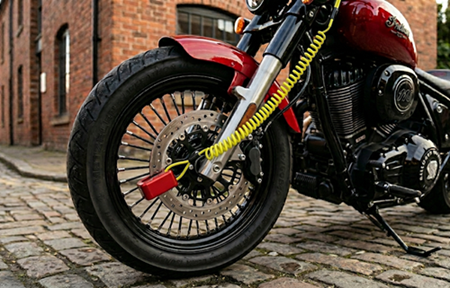
- Lock Down, Don’t Just Lock Up: A simple steering lock won’t stop a professional. Invest in a heavy-duty chain to secure your frame to an immovable object (like a ground anchor or heavy pole). Use a disc lock with a built-in alarm to ensure any movement triggers an immediate, loud response.
- Cover Your Assets: An inexpensive cover does more than protect against weather; it hides your bike’s identity and makes it a “mystery target” that thieves are less likely to gamble on.
Electronic Deterrents
- Audible Alarms: A 120 dB siren is your best friend when you’re grabbing a coffee or sleeping in a motel. It draws immediate attention to the thief, which is the last thing they want.
- GPS Tracking: If your bike is taken, technology is your best chance at recovery. Hide a battery-powered GPS tracker deep within the bike’s bodywork—somewhere inaccessible without tools. Consider using multiple units: one visible to act as a deterrent, and another hidden as a fail-safe.
Forensic Identification
Think of forensic marking (such as Datatag or similar systems) as a digital fingerprint for your bike. By applying microscopic markers and UV-reactive identification to components like your frame, engine, and fairings, you make the motorcycle “toxic” to chop shops. If the bike is dismantled, every part can be traced back to you, making the machine nearly impossible to sell legally.
Digital Vigilance
The best security measures are useless if you’re actively broadcasting your bike’s location to thieves.
- Mind Your Social Media: Avoid tagging your precise location or posting photos showing your home address or favorite parking spots in real-time.
- Wait to Post: Don’t unintentionally give your unattended bike’s location away. Share your ride photos after the fact, and not while you’re there.
- Keep it Discreet: Avoid leaving expensive gear, like helmets or jackets, unattended on your bike. It doesn’t just invite theft, it signals that your motorcycle is likely worth the effort for a thief.
The Bottom Line
There is no single magical safeguard for motorcycle theft. The most effective approach is stacking these defenses. By combining physical locks, electronic alarms, GPS tracking, and using smart online habits, you transform your motorcycle from an easy target into a hardened, high-risk proposition.
Take the extra two minutes to chain your frame and set your alarm. It’s a small price to pay to ensure that when you head back to your bike, it’s exactly where you left it.
Have you implemented a security strategy that works for you, or have you had to learn the hard way?